Solutions & Co. Solutions & Co. Solutions & Co.

Welcome to the Solutions & Co. Blog

  • Home
    Home This is where you can find all the blog posts throughout the site.
  • Themes
    Themes Displays a list of themes from this blog.
Recent blog posts

The 10 Most Frequent Phobias

1. Social Phobia - Fear of interacting with people
2. Agoraphobia - Fear of crowds
3. Emetophobia - Fear of vomiting
4. Ereutophobia - Fear of blushing in public
5. Amaxophobia - Fear of driving a car
6. Hypocondria - Fear of disease
7. Aerodromophobia - Fear of flying
8. Arachnophobia - Fear of spiders
9. Zoophobia - Fear of animals
10. Claustrophobia - Fear of closed spaces

(Source: British National Health Service)

It’s hard to believe but we are actually more afraid of interacting with people and of blushing in public than we are of spiders and disease. From an interpersonal behavior perspective, it’s quite surprising!


Hits: 57
0
0 Comments

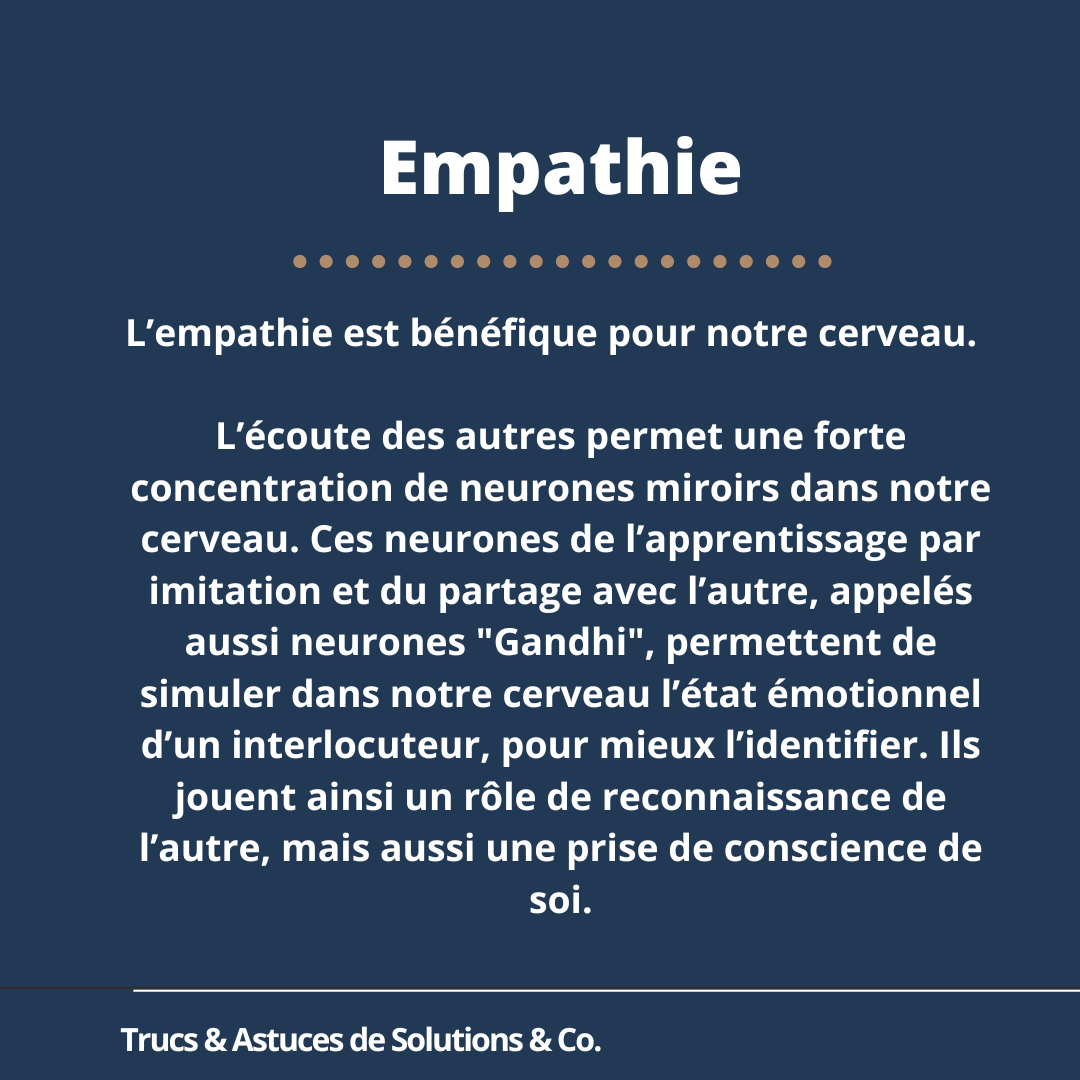
Ever walk into someone’s office and forget why you came? Blame the doorway. Research has shown that doorways serve as "event boundaries": because the brain associates certain memories of events with locations, entering a new room can make it hard to recall information you had in another room. So office cubicles might be a great workplace strategy after all!


Hits: 65
0
0 Comments
Endocrinologists call it "Postprandial dip", you may call it the "mild coma" that usually occurs 2 hours after a meal. It is caused by a drop in our glucose levels and a shift in our "body clock". Our brain starts to operate slower and our body temperature starts to drop and we naturally start to feel somnolence, drowsiness and lassitude. When possible, try avoiding scheduling or attending meetings during this time frame, unless you want to start drooling during your boss’s PowerPoint presentation.
Hits: 67
0
0 Comments
b2ap3_thumbnail_Sapproprier-le-changement_20130527-153613_1.jpg

We are very ambivalent when it comes to change. We constantly ask our surrounding environment (spouse, colleagues, children, politicians, bosses, etc.) to change. But as soon as this very environment asks us to, we become “resistant”, our defense mechanisms kick in, we argue in order to maintain status quo. We are used to our “routines” and it is hard for us to get out of them. This change subjects us to stress, reviving from the depths of the reptilian brain a sense of insecurity, which pushes us to mobilize our strengths to fight the menace and ensure our survival.

Change forces us to see a new way of doing, to adapt, to adopt new circumstances and conditions.

It’s clear that any organization/team/individual which wishes to impose change has the responsibility of implementing an efficient change process.

  • Every change process relies on a legitimate diagnostic, based on the answer to the questions “Why change?”.
  • Then follows a strategy set-up which leads, lists and defines the desired actions. It answers the question “What to change and how should it be done?” and helps eliminate uncertainty and ambiguity created by the change.
  • The strategy is followed by the application phase, which covers the transition from the present situation to the desired situation. It includes two steps: the disintegration of the existent habits and the reconstruction of new ones. At this stage, the familiar markers tend to disappear, and the new ones remain to be defined and concretized.
  • Finally comes the execution phase where we get up-to-speed. We now refer to the phenomenon as the operating procedure rather than change.

However, even the best of processes cannot guarantee success. It will be necessary that every individual involved with the change own up to it for the change to be successful. Owning up to change is essentially an individual development affair. It relies just as much, if not more, on the perceptions coming from the individuals living the change than the reality of the current situation.

The same change can provoke very different reactions from one individual to another, based on the perception they have of it. Every change processed as a problem will operate under suffering.

...
Continue reading Hits: 62
0
0 Comments

Tips & Co. - The Habit

Posted by on in Tips & Co.

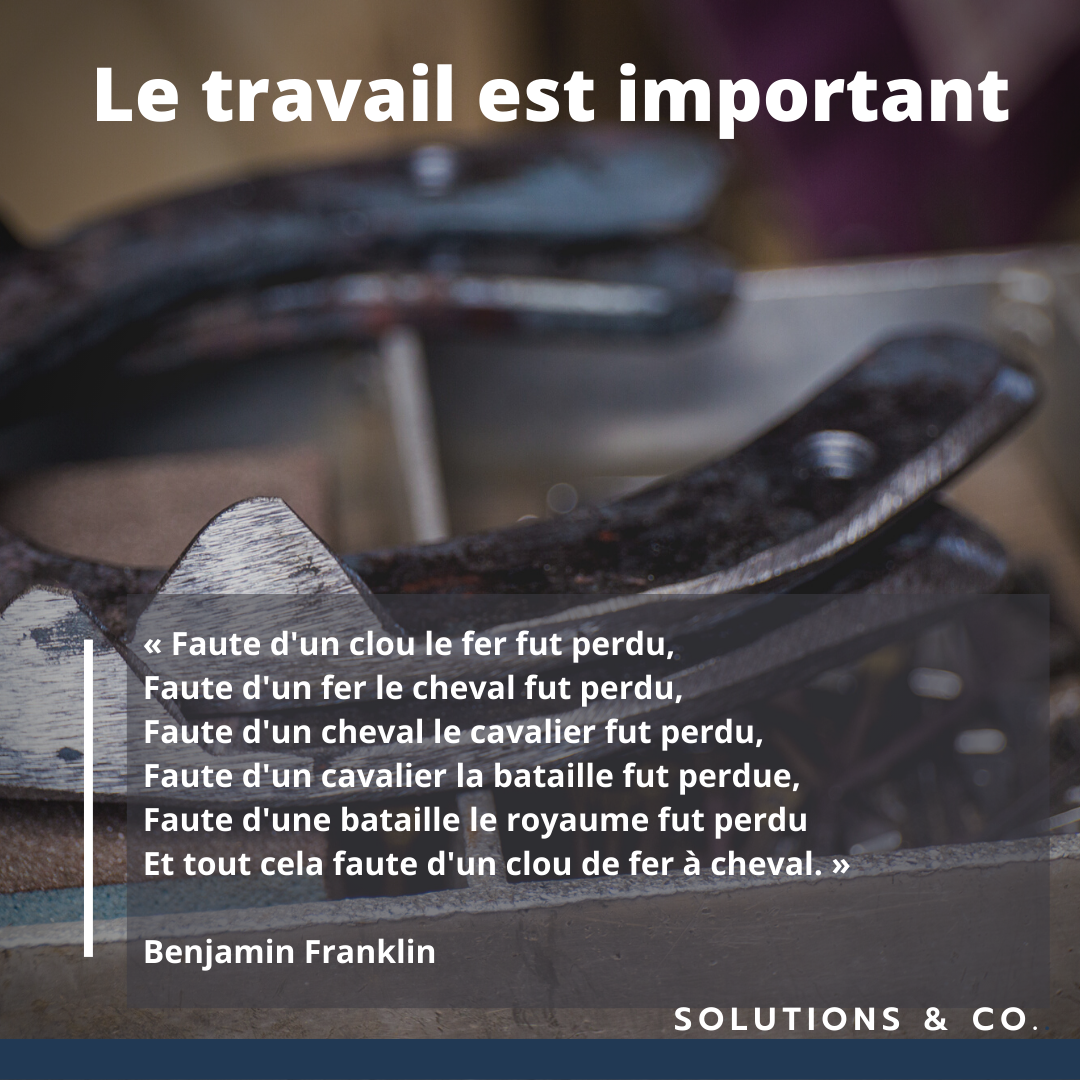
"Choose what is best; habit will soon render it agreaable and easy." 

- Pythagoras 


Hits: 30
0
0 Comments